Accessible healthcare depends on effective communication, and overcoming language barriers is a crucial step toward ensuring patients receive accurate and timely care.

As healthcare becomes increasingly global, medical professionals must communicate with patients, researchers, and organizations from different linguistic backgrounds. However, language barriers can create serious challenges, particularly when medical information involves diagnoses, treatment instructions, clinical research, or patient consent.

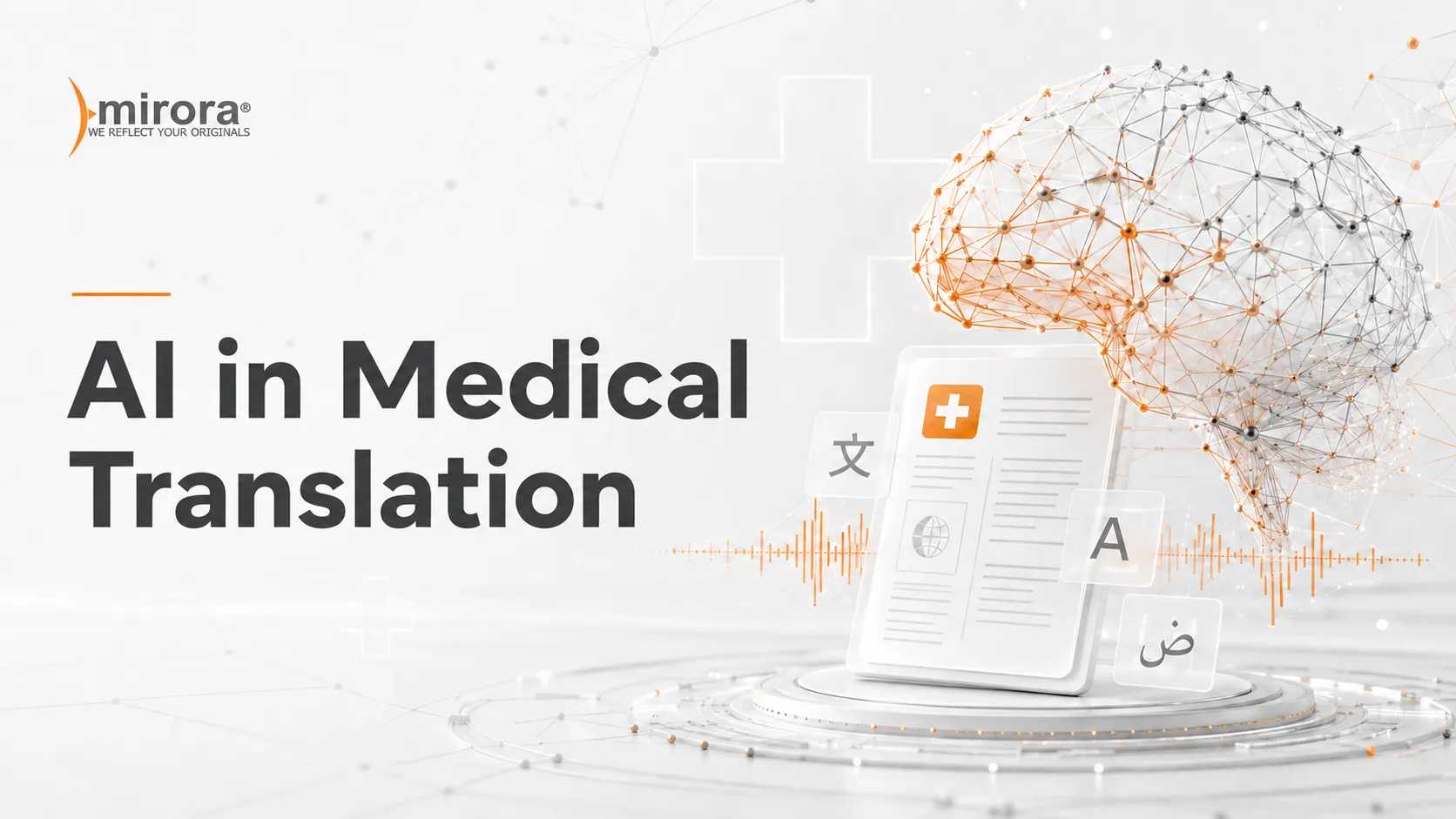
Artificial intelligence (AI) is transforming medical translation by offering faster, more accessible, and scalable language solutions. Through technologies such as natural language processing (NLP), machine learning, and deep learning, AI systems can process large amounts of medical content and support communication between healthcare providers and patients.

However, healthcare translation is a high-stakes field where accuracy, cultural understanding, and patient safety are essential. While AI provides significant advantages, it also has limitations that require careful consideration.

The Growing Capabilities of AI in Medical Translation

Faster and More Accessible Healthcare Communication

One of AI’s most significant contributions to medical translation is speed. AI-powered systems can process large volumes of medical documents, including clinical trial materials, research papers, medical records, and regulatory documents , in significantly shorter timeframes.

AI translation tools also provide continuous availability. Unlike traditional interpretation services that depend on human availability, AI systems can provide translation support at any time, helping healthcare organizations improve communication efficiency.

In real-time healthcare environments, AI-powered speech recognition and translation tools can support conversations between patients and healthcare providers who speak different languages. This capability can be particularly valuable when immediate communication is required.

Consistency and Terminology Management

Medical communication requires consistency. AI systems trained on medical-specific data can help maintain consistent terminology across large volumes of healthcare documents, including clinical trial documentation and patient information materials.

Machine learning algorithms analyze large amounts of medical language data, allowing AI systems to recognize patterns and improve translation quality over time.

The Limitations of AI in Medical Translation

Challenges with Medical Terminology and Context

Although AI performs well with many common medical terms, it can struggle with highly specialized terminology, rare diseases, complex procedures, and emerging medical concepts.

Medical translation is not only about converting words from one language to another. Meaning depends heavily on context. AI systems may produce grammatically correct translations while failing to capture the intended medical meaning.

For example, medical language often includes abbreviations, clinical shorthand, and terms that may have different meanings depending on the situation. These challenges can create risks if translations are used without professional review.

Cultural Sensitivity and Human Understanding

Healthcare communication requires more than linguistic accuracy. Cultural beliefs, expressions, and communication styles influence how patients understand medical information.

AI systems may struggle with cultural nuances, idiomatic expressions, and region-specific meanings. Human interpreters can recognize these differences and adapt communication accordingly.

Accuracy Concerns in Complex Healthcare Communication

AI translation performance is often stronger for widely used languages with large amounts of available training data. However, accuracy can decrease for low-resource languages where limited language data is available.

Additionally, AI systems may provide translations with confidence even when the output contains errors. This can create challenges because users may not always recognize when AI-generated information requires further review.

Privacy, Security, and Ethical Considerations of AI Translation

Medical translation often involves sensitive patient information. AI systems may require access to medical data, creating concerns regarding confidentiality, data storage, and security.

Healthcare organizations must carefully evaluate AI solutions to ensure appropriate protection of patient information. Important considerations include data security practices, privacy compliance, access controls, and preventing sensitive information from being used for unrelated purposes.

AI implementation must also consider ethical issues related to patient rights, transparency, and equitable access to accurate communication.

Why Human Expertise Remains Essential in AI-Powered Medical Translation

AI is a powerful tool, but human expertise remains essential in medical translation. Professional translators and interpreters provide capabilities that AI cannot fully replicate, including cultural awareness, emotional understanding, clarification of unclear information, and professional judgment.

A human-in-the-loop approach combines AI’s speed and consistency with human validation. This approach helps ensure that translated medical information is accurate, culturally appropriate, and safe for patients and healthcare professionals.

The Future of Medical Translation: A Human-AI Collaboration Model

The future of medical translation will likely depend on collaboration between AI technologies and human experts. AI will continue improving through advances in natural language processing, multilingual models, and healthcare-focused solutions.

However, responsible implementation requires clear boundaries. AI can support routine translation tasks and improve efficiency, while human professionals remain essential for complex, sensitive, and high-risk communication.

Comments are closed