...

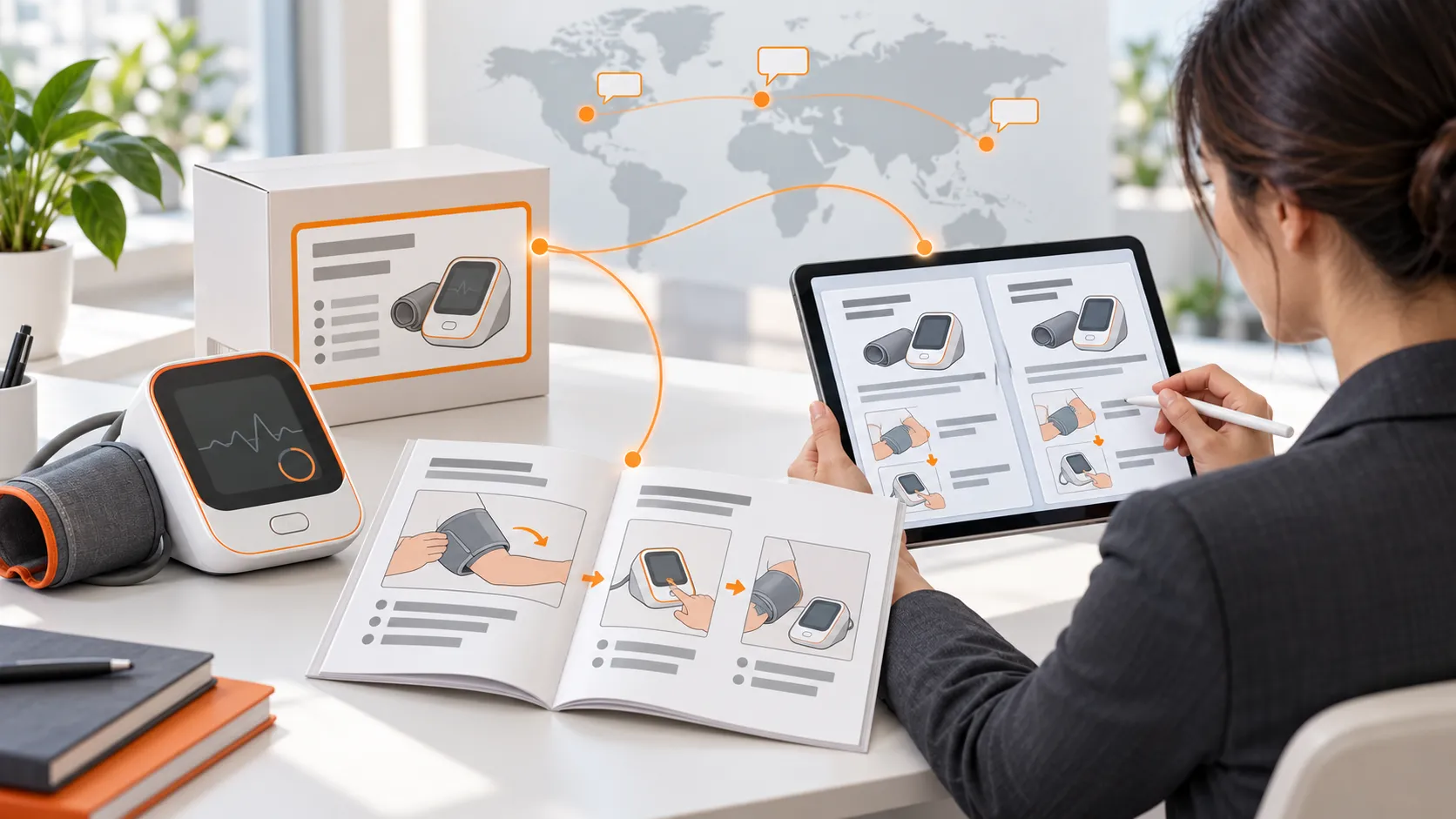
A medical device may be designed for use in several countries, but the information accompanying it cannot always remain the same across markets. Labels, instructions for use (IFUs), and software interfaces help healthcare professionals and patients identify devices, understand their intended purpose, and follow instructions for safe use. When this information is translated, medical accuracy, usability, and regulatory requirements all need attention.

For manufacturers expanding internationally, medical device translation is more than a language task. It is a coordinated process involving product documentation, regulatory teams, technical specialists, and language professionals. The challenge is to preserve the intended meaning of product information while addressing the requirements of each target market.

Why Medical Device Translation Matters

Medical device documentation serves different audiences and purposes. A healthcare professional may need detailed technical instructions, while a patient using a device at home may need straightforward guidance on operation, precautions, and troubleshooting. These differences affect how information should be presented. A translation must be accurate and appropriate for the people expected to use the device.

In the European Union, Regulation (EU) 2017/745 on medical devices (MDR) sets requirements for information supplied by manufacturers. Annex I, Section 23 addresses labels and instructions for use, including their content and suitability for intended users. For in vitro diagnostic medical devices, Regulation (EU) 2017/746 (IVDR) establishes corresponding requirements in Annex I, Section 20. These are separate legal frameworks; manufacturers must identify which provisions apply to their products.

Which Documents May Need Translation?

The scope depends on the device, intended users, target market, and applicable requirements. Common categories include:

  • Product labels and packaging information
  • Instructions for use and user manuals
  • Warnings, precautions, and safety information
  • Software interface text and on-screen instructions
  • Patient-facing information and educational materials
  • Field safety notices and other relevant safety communications
  • Technical or regulatory documentation, when required for a particular purpose

These materials should not automatically be treated as one package. Some accompany the device, while others support regulatory activities or communication with healthcare professionals. Practical consideration: Prepare a document inventory identifying purpose, intended audience, market, languages, and approval responsibilities.

EU Language Requirements Under the MDR and IVDR

Article 10(11) of the MDR requires manufacturers to ensure that devices are accompanied by the information specified in Annex I, Section 23 in the official EU language or languages determined by the Member State where the device is made available to the user or patient. Article 10(10) of the IVDR contains a corresponding requirement referring to Annex I, Section 20. Manufacturers should not assume that the same language arrangement is accepted in every EU country.

The European Commission publishes separate tables summarizing Member States’ language requirements under the MDR and IVDR. These tables are useful planning aids, not substitutes for the applicable EU legislation or national provisions. Manufacturers should verify current requirements for each product and market before finalizing their translation scope.

What About Medical Device Software Interfaces?

Menus, error messages, settings, alerts, and on-screen instructions may be integral to how a device is operated. The Commission’s language tables also discuss graphical user interfaces (GUIs). The MDR and IVDR do not establish a single dedicated, EU-wide GUI language rule; national requirements and device-specific considerations may apply. Decisions about interface localization should reflect the device’s intended purpose, users, safety-related functions, and relevant national rules.

Translating Labels: Limited Space, Important Information

Depending on the device and applicable requirements, labels may contain identification details, storage conditions, warnings, expiry information, or instructions related to use. Translation teams must preserve the meaning without compromising readability or introducing ambiguity.

  • Use consistent device and component names.
  • Check warnings, precautions, dates, numbers, and units.
  • Verify abbreviations and symbols against applicable requirements.
  • Review translated text in the actual label layout.
  • Maintain consistency between labels and instructions for use.

Recognized symbols can help communicate certain information, but they do not automatically eliminate the need for translated text. Practical consideration: A linguistically correct translation may still need layout adjustment if the final label is difficult to read.

Instructions for Use: Accuracy and Usability

Instructions for use may cover operating procedures, preparation, maintenance, troubleshooting, and safety information. Translation must preserve the intended sequence and meaning. The difference between a mandatory instruction and a recommendation must remain clear; warnings should not be weakened, and steps should not be reordered in a way that changes the intended procedure.

The language must suit the intended user. Information prepared for trained healthcare professionals may need a different linguistic approach from instructions for patients or home users. Identifying the audience at the outset helps language specialists make appropriate terminology and readability decisions.

Can Instructions for Use Be Supplied Electronically?

Electronic instructions for use are governed by specific EU rules and conditions. Manufacturers should not assume that a digital document can replace a paper IFU for every device. The applicable framework, device category, user group, and current legal conditions should be checked before deciding on the delivery format.

Terminology Across the Product Lifecycle

Product terminology may appear in labels, IFUs, software, training materials, and technical documents. Inconsistencies can cause confusion when users need to match instructions to physical controls or on-screen messages. A project glossary can include approved device and component names, technical and clinical terms, interface labels, warnings, abbreviations, and terms that must remain untranslated.

Terminology decisions should be approved by the appropriate product or subject-matter specialists. Translation memories can support consistency when documents change, but previously translated segments still require review in their new context.

Quality Assurance Beyond Linguistic Review

Fluent text is not necessarily correct text. A translation may read naturally while containing a wrong technical term, an altered number, or an instruction that no longer matches the device’s operation. A risk-appropriate process may include the following checks:

Quality check

What it addresses

Source-to-target review

Accuracy and completeness

Terminology verification

Consistency with approved product terms

Numerical checks

Units, measurements, dates, and critical values

Technical review

Alignment with device functions and intended use

Layout verification

Readability, symbols, and text placement

Software testing

Display, truncation, context, and usability

Version control

Traceability between source and translated versions


Linguistic reviewers assess language accuracy and consistency. Technical and regulatory specialists may need to address issues that require product knowledge or interpretation of applicable requirements. Final responsibility for regulatory compliance remains with the manufacturer and other legally responsible parties.

Managing Updates and Multilingual Versions

Medical device documentation changes as products and instructions are revised or new information becomes available. Each source update can affect multiple language versions. A controlled process should record the source revision, affected files, target languages, translation and review status, and required approvals.

Software changes may also require in-context checks to confirm that translated interface text displays correctly and remains understandable. Manufacturers should establish how changes are communicated to language teams and how approved translations enter their documentation and quality processes.

A Practical Medical Device Translation Checklist

Area

Question to confirm

Regulatory framework

Does the MDR, IVDR, or another framework apply?

Target markets

Have national language requirements been confirmed?

Document scope

Which labels, IFUs, interfaces, and materials are included?

Intended users

Is the content for professionals, patients, or both?

Terminology

Are approved terms and reference materials available?

Quality checks

Are linguistic, technical, and layout reviews assigned?

Software localization

Are interface requirements and testing needs assessed?

Version management

Can each translation be traced to its source revision?

Final approval

Are release and regulatory review responsibilities defined?


Preparing Device Information for International Markets

Medical device translation is most effective when integrated into product documentation and market-entry planning. Early confirmation of language requirements, consistent terminology, appropriate reviews, and controlled revisions help manufacturers manage multilingual information more reliably.

An experienced medical translation partner can support qualified language specialists, structured review workflows, terminology management, and multilingual coordination. Translation services do not, however, replace the manufacturer’s responsibility to establish and demonstrate compliance with applicable requirements. The objective is accurate, understandable, and consistent product information in the languages and markets where it will be used.

Blog

Other Articles You May Enjoy

Comments are closed